Treatment
What Are Stem Cells?
Stem cells are special human cells that are able to develop into many different cell types. This can range from muscle cells to brain cells. In some cases, they can also fix damaged tissues. Researchers believe that stem cell-based therapies may one day be used to treat serious illnesses, such as paralysis and Alzheimer disease.
Types of stem cells
Stem cells are divided into 2 main forms. They are embryonic stem cells and adult stem cells.
Embryonic stem cells. The embryonic stem cells used in research today come from unused embryos. These result from an in vitro fertilization procedure. They are donated to science. These embryonic stem cells are pluripotent. This means that they can turn into more than one type of cell.
Adult stem cells. There are 2 types of adult stem cells. One type comes from fully developed tissues, such as the brain, skin, and bone marrow. There are only small numbers of stem cells in these tissues. They are more likely to generate only certain types of cells. For example, a stem cell that comes from the liver will only make more liver cells.
The second type is induced pluripotent stem cells. These are adult stem cells that have been changed in a lab to be more like embryonic stem cells. Scientists first reported that human stem cells could be changed in this way in 2006. Induced pluripotent stem cells don't seem to be different from embryonic stem cells, but scientists have not yet found one that can develop every kind of cell and tissue.
Stem cells in medicine
The only stem cells now used to treat disease are hematopoietic stem cells. These are the blood cell-forming adult stem cells found in bone marrow. Every type of blood cell in the bone marrow starts as a stem cell. Stem cells are immature cells that are able to make other blood cells that mature and function as needed.
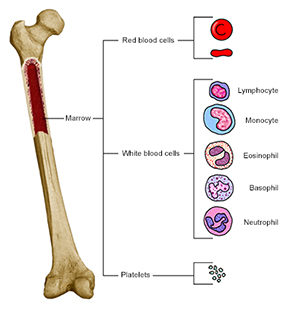
These cells are used in procedures, such as bone marrow transplants. These help people with cancer make new blood cells after their own hematopoietic stem cells have been killed by radiation therapy and chemotherapy. They may also be used to treat people with conditions, such as Fanconi anemia. This is a blood disorder that causes the body's bone marrow to fail.
Stem cells may help your health in the future in many ways and through many new treatments. Researchers think that stem cells will be used to help create new tissue. For example, one day healthcare providers may be able to treat people with chronic heart disease. They can do this by growing healthy heart muscle cells in a lab and transplanting them into damaged hearts. Other treatments could target illnesses such as type 1 diabetes, spinal cord injuries, Alzheimer disease, and rheumatoid arthritis. New medicines could also be tested on cells made from pluripotent stem cells.
Challenges in stem cell research
Stem cells need much more study before their use can be expanded. Scientists must first learn more about how embryonic stem cells develop. This will help them understand how to control the type of cells created from them. Another challenge is that the embryonic stem cells available today are likely to be rejected by the body. And some people find it morally troubling to use stem cells that come from embryos.
Scientists also face challenges when using adult pluripotent stem cells. These cells are hard to grow in a lab, so researchers are looking into ways to improve the process. These cells are also found in small amounts in the body. There is a greater chance that they could contain DNA problems.
Clinical trials that use stem cell therapies are currently being done in the U.S. If you are interested in trying this therapy to treat a certain condition, ask your healthcare provider how to find out about trials available in your area.
Author: Scott, Jennifer Acosta
Online Medical Reviewer: Jessica Gotwals RN BSN MPH
Online Medical Reviewer: Ronald Karlin MD
Online Medical Reviewer: Todd Gersten MD
Date Last Reviewed: 12/31/2022
© 2000-2026 The StayWell Company, LLC. All rights reserved. This information is not intended as a substitute for professional medical care. Always follow your healthcare professional's instructions.
Personalized care starts with the right provider
Search by specialty, location, and more.
FIND A DOCTORRelated Articles
Overview of Blood and Blood Components
Blood is the life-maintaining fluid that circulates through the entire body. Learn about the components of blood.
Hemophilia
Hemophilia is an inherited bleeding disorder. People with hemophilia can’t stop bleeding because they don’t have enough clotting factor in their blood. Clotting factors are needed for blood to clot. Blood clots to prevent excessive bleeding.
Beta Thalassemia
Beta thalassemia is a genetic disease inherited from one or both parents. Read on to learn more about the different forms of this disease, treatment, and more.
What Are Platelets?
If 1 of your blood vessels gets damaged, it sends out signals that are picked up by platelets. The platelets then rush to the site of damage and form a plug, or clot, to repair the damage.