The CDC advises that people with asthma get certain vaccines. Vaccines help the immune system protect against bacteria or viruses to prevent infection.
Flu shot
The flu (influenza) is an infection caused by a virus. The virus spreads from person to person through coughing or sneezing. Flu symptoms may include:
-
A sudden high fever.
-
Chills.
-
Severe tiredness (fatigue).
-
Body aches.
-
A sore throat.
-
A runny or stuffy nose.
-
A dry cough.
-
A headache.
-
Vomiting and diarrhea in some people.
But people with asthma who catch the flu may get very sick. This sometimes leads to pneumonia. In some cases, you may need a hospital stay. You're at higher risk of serious complications. So contact your doctor if you have any flu symptoms.
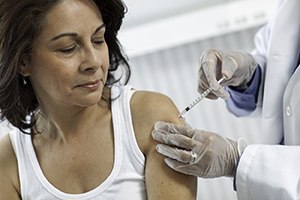
If you have asthma, you should get a yearly flu shot. Keep in mind that the flu shot will help protect you from getting the flu. But it won't reduce asthma flare-ups from other viruses during flu season.
The flu vaccine doesn't provide full protection. It makes it less likely that you will catch the flu for about the next 6 months. If you do catch the flu, having the vaccine should make your illness less severe. You need a new flu shot each year.
The best time to get the flu shot is when it becomes available in your community. This will help make sure that you are protected before flu season starts. It helps if the people you live with get flu shots too. Don’t get the nasal spray vaccine. It could set off an asthma attack.
Here are some other tips to help you stay healthy:
-
Scrub your hands often and for at least 20 seconds each time.
-
Cover your mouth and nose when you cough or sneeze.
-
Stay away from people who are sick.
-
Don't touch your eyes, nose, and mouth.
-
Clean and disinfect surfaces that may have germs on them.
Pneumonia shot
Pneumococcal disease is a bacterial illness. It can cause serious or even deadly infections of the:
-
Lungs (pneumonia).
-
Blood (bacteremia).
-
Covering of the brain and spinal cord (meningitis).
There are two types of vaccines that can help prevent pneumococcal disease. The vaccine that is right for you depends on your age and risk factors. Talk with your doctor about which vaccine is best for you and when you should get it.
The pneumococcal vaccine can't prevent all cases. But it can help protect you from the worst infections.
COVID-19 shot
COVID-19 is a respiratory illness caused by a virus. People with asthma may be at higher risk of severe illness from COVID-19. One of the best things to do to reduce complications of COVID-19 is to get vaccinated. Talk to your doctor about the COVID-19 vaccine and when to get it.
Your doctor may recommend other vaccines depending on your age and health history. Keep a record of when you receive each of these and other vaccines.
Featured in
Date Last Reviewed: 08/31/2025
© 2000-2026 The StayWell Company, LLC. All rights reserved. This information is not intended as a substitute for professional medical care. Always follow your healthcare professional's instructions.
Personalized care starts with the right provider
Search by specialty, location, and more.
FIND A DOCTORRelated Articles
Controlling Asthma Triggers at Home and Work
An important part of managing asthma is the control of triggers. These are things that make symptoms worse or cause flare-ups. Triggers may be anywhere, inside or out.
Managing Your Asthma Medicines
Medicines play a key role in controlling asthma. Some help to prevent symptoms. Others are used to treat symptoms.
About Your Asthma Action Plan
Your Asthma Action Plan includes information about your symptoms and medicines. It also includes instructions about managing your asthma symptoms and when to call your doctor.
Asthma and Physical Activity
Learn the ways that exercise can cause problems when you have asthma and some tips for managing your exercise.