Healthy Living
Exercise Ideas for Older Adults
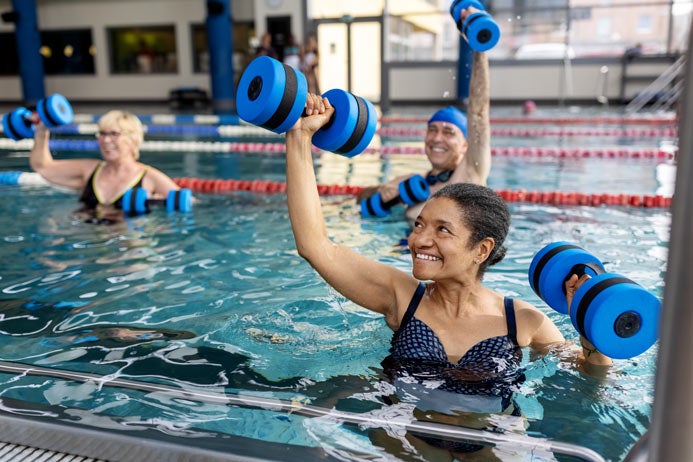
Finding ways to exercise as you get older is a smart and easy way to stay fit and improve your health. Exercise is just as important in your older years as when you were younger. Research shows that an exercise routine offers many health benefits.
It's also well known that regular exercise can help to boost heart health, keep a healthy body weight, keep joints flexible and healthy, and improve balance to reduce falls.
Exercise does not take as much time as you may think. For general health benefits, older adults need about 2½ hours of aerobic (walking, running, and other activities that get the heart pumping faster) activity a week. These activities should be combined with activities that strengthen muscles at least 2 days a week.
Joining a gym and making use of the machines, trainers, and classes is one way to exercise. But you can also have fun there, meet new people, and choose from many different activities that keep you healthy and strong.
Always talk with your doctor before starting any exercise or physical activity program.
Easy ways to exercise
Exercise comes in many forms, including activities that feel more like fun than hard work:
- Dance. Sign up for a dance class with your spouse or a friend or carve out some dance time at home.
- Go bowling. Join a bowling league or make a weekly date with some of your friends. If you have grandchildren, bring them along.
- Rediscover a favorite sport. Whether you love the elegance of golf or the challenge of tennis, make time for these leisure activities. If possible, vary your activities over the course of each week to work different muscle groups.
- Enjoy the great outdoors. When the weather cooperates, ride your bike, visit a local park for a hike, or simply go for a walk. These are all great exercises that get you outside and into the fresh air.
- Get in the swim. Swimming is an excellent exercise choice, especially if you have arthritis joint pain. Join a local fitness center that has a pool. Work in regular swims to meet your cardiovascular needs without straining your joints.
Balance and strengthening count, too
To help prevent falls, it's important to practice exercises that improve your balance. Yoga and tai chi fit the bill. They will also help you manage stress, feel more relaxed, and improve muscle tone. Yoga and tai chi classes are widely available in many communities, such as at senior centers and fitness clubs, including the Y.
Taking some time to stretch every day can also help keep your joints flexible and keep you moving well. It's also important to lift some light weights. Canned goods from your cupboard are a fine substitute. You can also use a resistance band to tone your muscles.
Work out while you work
Add more energy when doing chores and these regular activities will count as a workout:
- Cleaning the house
- Raking leaves in the yard
- Gardening
- Mowing the lawn
- Sweeping and dusting
Remember that getting older doesn't mean slowing down. You've got to keep moving to stay young at heart as well as in mind, body, and spirit.
Featured in
Author: Ignite Staff
Online Medical Reviewer: Mike Murphy
Online Medical Reviewer: Raymond Turley Jr PA-C
Online Medical Reviewer: Stacey Wojcik MBA BSN RN
Date Last Reviewed: 06/30/2023
© 2000-2026 The StayWell Company, LLC. All rights reserved. This information is not intended as a substitute for professional medical care. Always follow your healthcare professional's instructions.
Personalized care starts with the right provider
Search by specialty, location, and more.
FIND A DOCTORRelated Articles
Divorce in Later Years
Getting a divorce is almost always painful and stressful, no matter how old or young you are. But if your marriage falls apart later in life, you may face some financial and emotional setbacks that are more difficult to recover from than when you were younger.
For Older Adults: You Can Beat the Heat
After age 65, your body can't adjust to changes in air temperature--especially heat--as quickly as it did when you were younger. That puts you at risk for heat-related illnesses.
Parenting Déjà vu: Raising Your Grandchildren
About 4.9 million children live in households headed by grandparents. These are commonly called "grandfamilies" or "second families." Two out of three of your fellow grandparents handling this responsibility are older than 50, and the children are often under age 6.
Tips for Driving After Age 60
A person's ability to drive isn't based on age alone. But age-related changes in vision, physical fitness, and reflexes may be reasons to reevaluate your abilities behind the wheel.