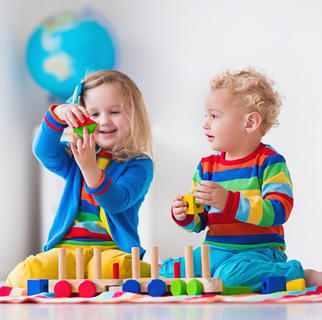
What are the different stages of play?
As one can expect, children at different ages don't all play the same way. There are distinct stages that children go through as they grow. Each stage is very important to the development of the next. While not all children are the same and may not progress through the stages at the same time, these are common types of play grouped according to your child's age:
- Infant. Babies like to be entertained. As a baby grows, they are able to play with toys with more purpose.
- Toddler. A toddler enjoys playing on their own with toys. They particularly enjoy playing with toys that include body movement or noise. During this stage, toddlers progress from solitary play to parallel play.
- Preschooler. A preschooler enjoys watching their peers and imitating others. There is only some interaction while actually playing. Older preschool children start to interact with each other by borrowing and lending toys. This age group often starts make-believe play.
- School-aged child. A school-aged child enjoys competitive games and sports, and formal board games. They still engage in some fantasy play. Rules are important during play with the school-aged child.
- Adolescent. A teen enjoys competitive games and sports. The goal of this age group is social contact.
Talk to your doctor if you have concerns regarding your child's stage of play development
Featured in
Date Last Reviewed: 08/31/2025
© 2000-2026 The StayWell Company, LLC. All rights reserved. This information is not intended as a substitute for professional medical care. Always follow your healthcare professional's instructions.
Personalized care starts with the right provider
Search by specialty, location, and more.
FIND A DOCTORRelated Articles
Treat Children's OTC Medicines with Care
Over-the-counter medicines can help ease a child's aches and pains, but you should know a few things before you pop open a bottle.
Why Children Get Carsick—And What to Do
A look at why kids get carsick, with helpful tips for prevention—and what to do if it occurs.
Stuttering in Children
Stuttering is a speech problem. The normal flow of speech is disrupted. Stuttering may make it hard for a child to communicate with others.
Disciplining Your Child at Any Age
Each child is different, but most children need to be given clear rules about behavior. Read on for some discipline tips by age group.