December 2022
The average American takes in too little fiber, calcium, and essential vitamins, and too much fat, sugar, and sodium. Excess fat—especially saturated and trans fats—may raise the risk for heart disease. Too much sodium can lead to high blood pressure.
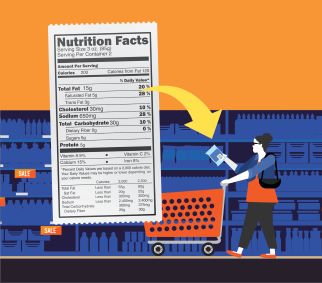
So do your heart a favor: Fix shortcomings in your diet by scanning both sides of food packages when you shop.
Upfront: Package claims
The U.S. Food and Drug Administration enforces laws about which foods can use terms such as low-fat. Look for the following health claims and understand what they mean:
-
A low-fat food contains 3 grams of total fat or less per serving.
-
The terms reduced sodium, reduced calorie, and reduced fat mean that a product has at least 25% less of these ingredients than the regular version.
-
The term lean means that meat, poultry, or fish contains low amounts of fat, saturated fat, and cholesterol.
-
The claim that a food is a good source of any nutrient (think fiber, for instance) means that one serving of the food contains between 10 and 19% of the daily recommended amount.
On the back: Nutrition stats
To avoid getting bogged down in numbers and percentages, follow these simple rules:
-
Watch the serving size. If you eat 2 portions, double the calories and nutrients.
-
Shoot for the highs and lows in percent daily value. It can show you if a food has a lot or a little of a particular nutrient. Foods that have more than a 20% daily value of a nutrient are high. Foods that have a 5% daily value or less are low. Plan to eat foods that provide more fiber, vitamin D, calcium, iron, and potassium. Eat foods that are lower in saturated fat, trans fat, cholesterol, added sugars, and sodium.

Personalized care starts with the right provider
Search by specialty, location, and more.
FIND A DOCTORRelated Articles
The Right Comfort Foods to Beat Stress
When you’re stressed, your first reaction may be to reach for a pint of ice cream or a bag of potato chips. Indulging in comfort foods definitely feels good in the moment. But foods high in sugar and carbohydrates can become an unhealthy crutch, making you feel worse in the long run.
A Healthy Diet: Your First Line of Defense Against Disease
A healthy diet lays the foundation for your overall well-being. And heart-healthy fruits and vegetables—between to 2 to 3 cups of vegetables and 1.5 to 2 cups of fruit each day—are the cornerstone.
Decoding Popular Diets
These diets may be trending, but are they right for you? Only you and your healthcare provider can answer that question. Use the information below as a starting point for your conversations.
The Have a Plant Program
This national program encourages Americans to eat more fruits and vegetables.